

Issue No. 52 June 2026 (£2.00)
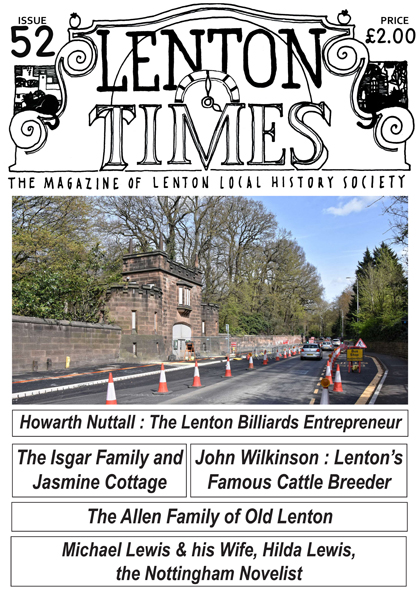
Howarth Nuttall: The Lenton Billiards Entrepreneur (5 pages)
After moving to Nottingham in 1923 Howarth Nuttall set up the Sneinton Billiard Works in a building on Haywood Street Nottingham. Some four years later he moved his business to Lenton. The Lenton Billiard Works could be found at the Lenton end of Castle Boulevard in the basement of the former Methodist Tin Chapel. His premises housed not only a billiard hall but also a workshop in which Mr Nuttall manufactured both billiard tables, billiard cues and all sorts of billiard accessories. He was also a promoter of exhibition matches all over the country in which the leading billiards and snooker players of the day played each other and then delighted the audiences with their range of trick shots.
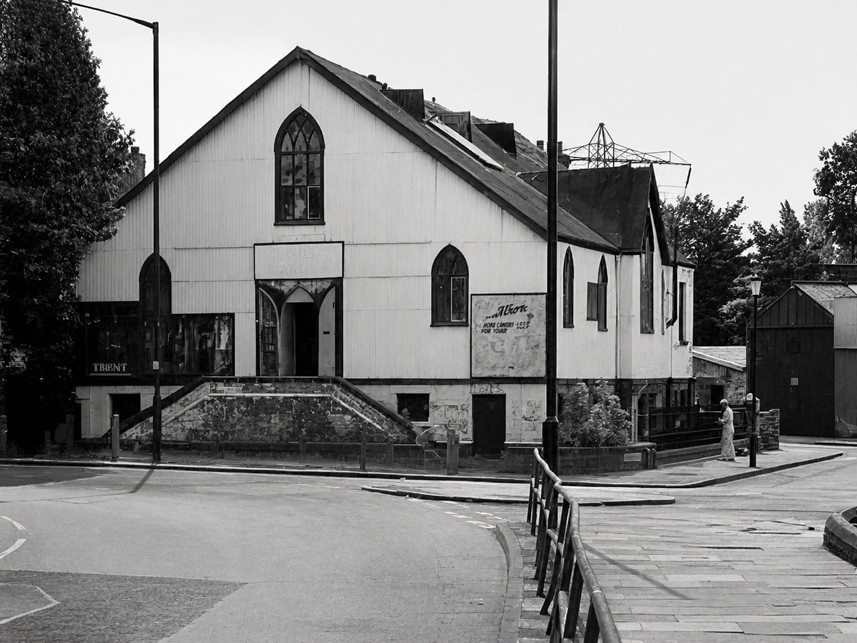
After his death in June 1952, his son, John Stanley 'Jock' Nuttall, took over the business. He not only continued to manufacture tables, cues et al. but also continued to promote celebrity matches. All this came to an end when John Stanley Nuttall was found dead at the billiard works in November 1959. At this point the business was closed down and the Tin Chapel's basement area had to find new occupants.
John Wilkinson: Lenton's Famous Cattle Breeder (6 pages)
John Wilkinson was a Shorthorn cattle breeder of great renown who farmed at Lenton. After he decided to sell off his herd, fellow breeders came from all over the country to attend the auction in April 1854. In the preceding decades and for many years afterwards, animals belonging to 'Mr J. Wilkinson of Lenton, Notts.' figured prominently in the bloodlines of many Shorthorn cattle bred in this country and overseas. This is John Wilkinson's story.
The Allen Family of Old Lenton (7 pages)
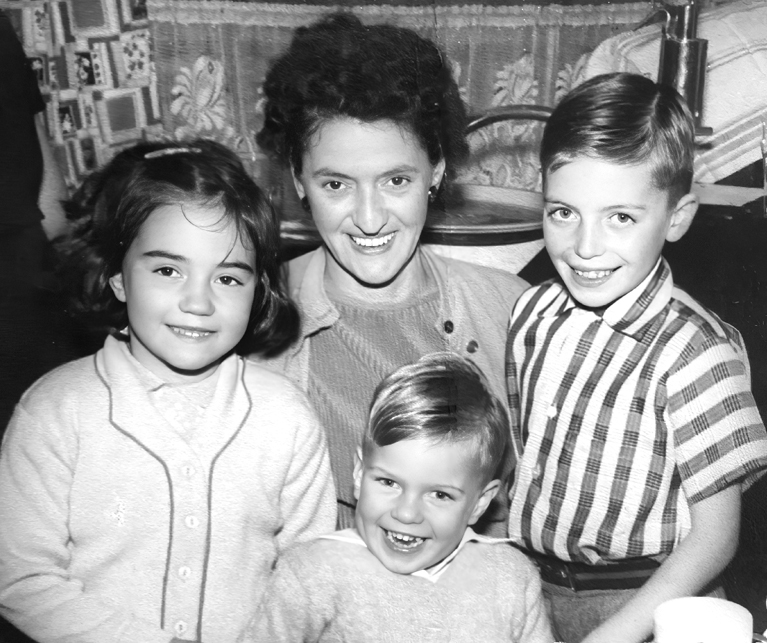
Cyril Allen's father was a miner at Clifton Colliery. In August 1949 he was killed while working at the coal seam by a fall of rock. At the time Cyril's mother, Ida, was pregnant, with her third child. This was Cyril who was born in March 1950 - so he never knew his father. In fact he never really got to know anyone on his father's side of the family. His family home was 52 Gregory Street, Old Lenton which could be found in close proximity to many of his mother's immediate family. A map of the area is included with this article which pinpoints where they all lived. There was also Eric Toplis, the lodger who came to stay, with whom Ida had two more children.
When the houses on this portion of Gregory Street were earmarked for demolition Cyril's mother was adamant she wasn't going to Clifton estate. She held out to the very last before the Council gave in and agreed that she could rent one of the houses on Abbey Bridge. So 49 Abbey Bridge became her home for the rest of her life.
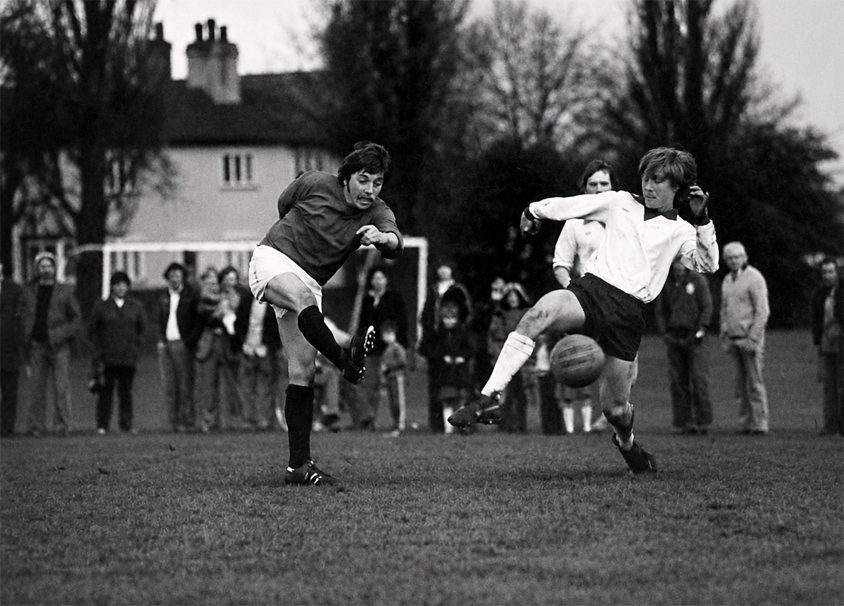
For two years Cyril's form master at Cottesmore Secondary School was, none other than Douglas Scott - later to become Doug Scott, the mountaineer. In one of Cyril's school reports Mr Scott wrote: "This young man is only interested in football. I can't get him interested in anything else." Cyril would later play football for a number of local teams before joining Dunkirk F. C. at the age of nineteen. It began an association with the club that has lasted almost up to the present day.
Cyril left school in 1965 and, after one or two short-term jobs, started working alongside his older brother, Ray, at a roofing company called William Briggs and Sons. He then spent the rest of his working life in the roofing industry.
All this and many more topics of local interest are included in Cyril Allen's story.
The Dudley Brothers of Old Lenton (2 pages)
Cyril Allen's maternal grandfather was Samuel Dudley, who, but for a career-ending injury, might well have gone on to become a professional footballer with Nottingham Forest F.C. Sam's brother did have an illustrious career with the club. His name was Walter William Dudley who played for Forest until the outbreak of the First World War. We have featured his story in Lenton Times 29. One aspect we failed to cover was what happened to his wife, Alice Dudley. All is revealed in this article!
Michael Lewis and His Wife, Hilda Lewis, The Nottingham Novelist (4 pages)
Morris Michael Lewis became a lecturer in education at University College, Nottingham in 1924. This meant he and his wife, Hilda, had to move to Nottingham from their home in London. Michael Lewis was promoted to senior lecturer in 1930 and was the author of a number of books for schools. His research work, however, was concerned with the psychology of children and the development of language in children, and his book, Infant Speech: A Study of the Beginnings of Language, published in 1936 became a standard work on the subject and has since been reprinted by Routledge in 2013.
In August 1939 Dr Lewis was appointed vice-principal of Goldsmith's College in London. It was a total co-incidence but, with the outbreak of war, the students and staff at Goldsmith College were evacuated to Nottingham and shared the campus facilities with University College, Nottingham. After the war the Nottingham University College established a new Institute of Education and Dr Lewis was appointed its first director and in 1956 was appointed Professor of Education here. All of which meant the Lewises remained in Nottingham.
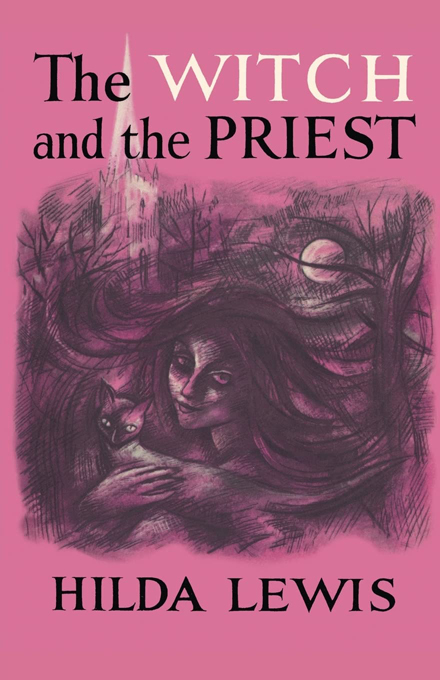
While they were living in Nottingham Hilda Lewis started writing novels - many of them with a historical focus. In her time she became a very successful novelist. One of her books - the Witch and the Priest - was reprinted in 2013 by Valancourt Books. The publishers commissioned the author, Alison Weir, to write an introduction to accompany this novel. In it Alison Weir discusses Hilda Lewis's works and explains why they deserve to be better known to current readers. We have been given permission to reproduce that introduction alongside our own article.
And why do we feature the Lewises in the magazine? Because for most of the time they lived in properties in Lenton and on the Wollaton Park Estate.
The Isgar Family and Jasmine Cottage (3 pages)
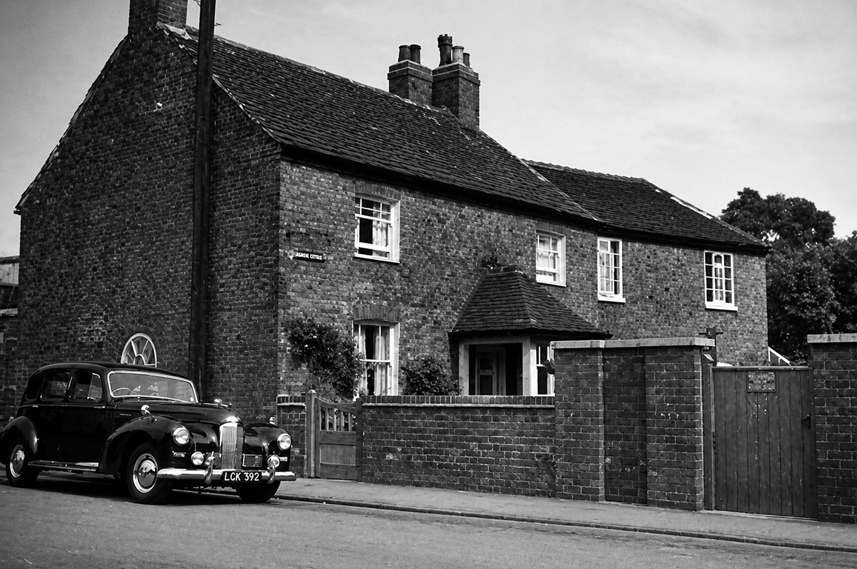
'Jasmine Cottage' - 57, Church Street, Old Lenton - was Peter and Yolanda Wasylko's home for nearly fifteen years - having bought the property from Yolanda's grandmother, Gladys Isgar. Yolanda tells us more about the Isgars and her family's involvement with Jasmine Cottage. This same property got a brief mention in our article in Lenton Times No.51 on the Renals family when it was their home in the 1860s.
Society Snips (2 pages)
Lenton Times - Issue 52 - Downloadable PDF Version
Once the payment is confirmed, we will send you details of the download link.
The link will be available online for 2 weeks from the date of notification.
Next Issue: Lenton Times No.53 should be available in December 2026.